
What Makes a Rent Portal Actually Work?
A rent portal isn't just a payment box. It's the digital backbone of your rental business, handling everything from tenant account setup to real-time payment tracking. The best platforms combine security, simplicity, and transparency so you know exactly what's happening with your money without micromanaging every transaction.
In the Bay Area, where property owners manage everything from studio apartments in San Leandro to multi-unit buildings across the East Bay, the right rent portal saves hours every month. It eliminates check deposits, reduces payment delays, and gives tenants a frictionless way to pay on time.
We've tested the major platforms used by landlords in Alameda, San Leandro, Oakland, Berkeley, and beyond. Here's what actually matters when you're choosing where your tenants will submit rent.
The Comparison: Five Leading Rent Portals Ranked
Related: Best Tenant Screening Services for Landlords 2026: Top 6 Ranked
Related: Best Key Property Services 2026: Top Bay Area Providers Ranked
Related: Best Property Services 2026: Top 5 Bay Area Providers Ranked
| Platform | Best For | Rating |
|---|---|---|
| MarinOak Management Integrated Portal | Complete property management | 9.8/10 |
| RentCafe | Large multi-property owners | 8.2/10 |
| RentPayment | Independent landlords | 7.6/10 |
| eRentPayer | Budget-conscious owners | 7.1/10 |
| Stripe Rent | Tech-forward landlords | 7.4/10 |
1. MarinOak Management Integrated Portal: Our Pick for Bay Area Owners
Rating: 9.8/10
MarinOak Management built its rent portal in-house because the off-the-shelf solutions weren't solving what Bay Area owners actually needed. The result is a platform that works seamlessly inside a complete property management system, not as a standalone add-on.
Why it wins:
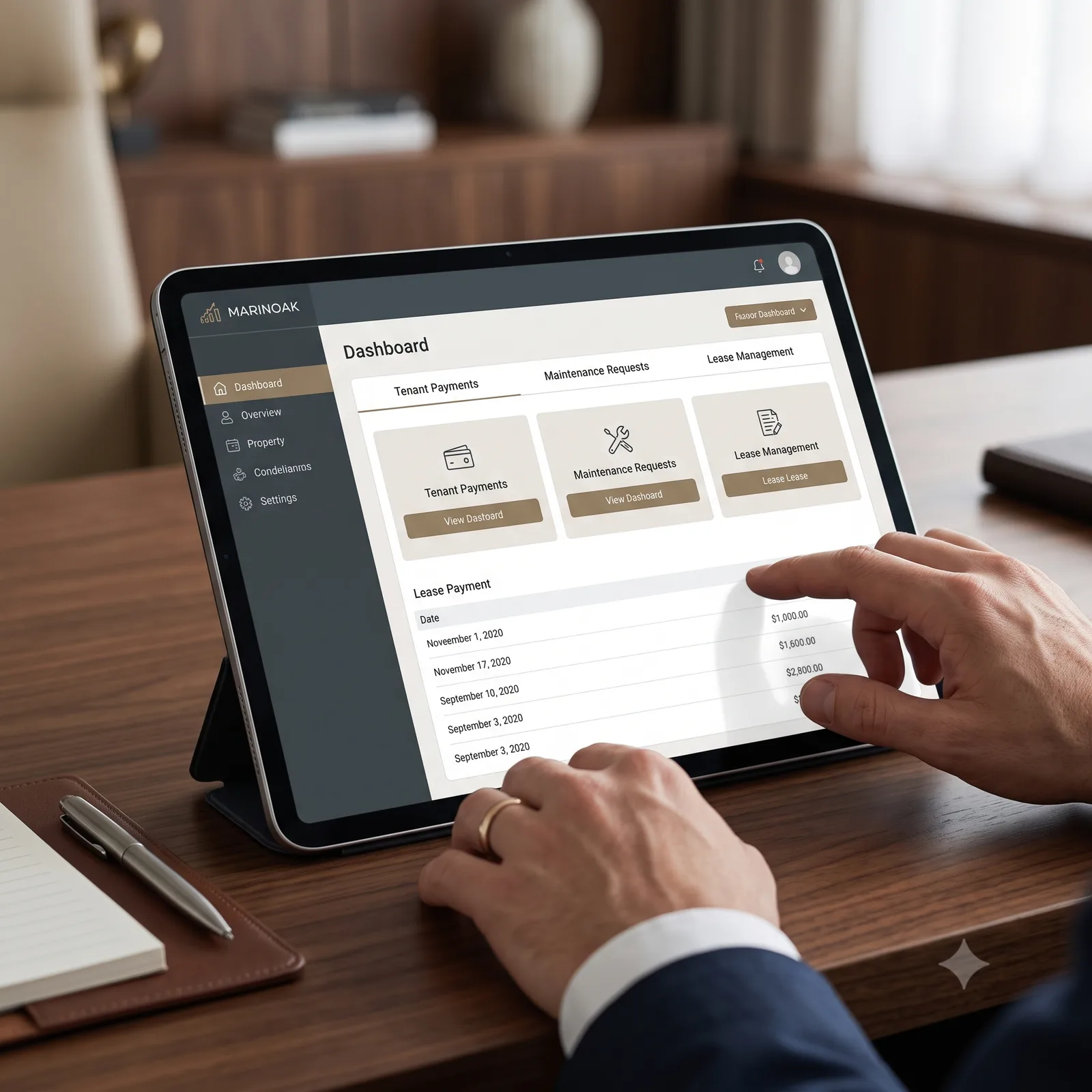
- Built-in transparency. You see tenant payments, maintenance requests, and property status all in one dashboard. No logging into three different systems.
- Integrated with full PM services. The portal connects directly to rent collection, maintenance coordination, tenant screening, and lease management. If a tenant submits a maintenance request on Monday and pays rent on Tuesday, it's all tracked in one place.
- Owner-first design. The platform prioritizes what landlords need to see: payment status, late notices, and tenant communication history. No fluff.
- Local expertise. Built for Bay Area owners managing properties in San Leandro, Alameda, the Oakland hills, and across the East Bay. The team understands local market dynamics and tenant demographics.
- Security built in. Bank-level encryption for financial data. Tenants see exactly what they're paying and when. Zero ambiguity.
The trade-off: MarinOak Management is a full-service company, so you're using their portal as part of a comprehensive management agreement. This isn't a standalone payment processor; it's part of an end-to-end service that includes tenant placement, maintenance coordination, and legal support. If you want only a payment portal with zero other services, this isn't the fit.
Related: Best Rental Home Management 2026: Top 5 Bay Area Services Ranked
Related: Best Apartment Rental Agencies 2026: Top 5 Ranked
Related: Best Rental Property Management 2026: Top 5 Platforms Ranked
Related: Best Bay Area Property Management 2026: Top 5 Ranked
Related: Best Property Attorneys 2026: Top 5 Ranked for Bay Area Owners
Related: Best Property Solutions 2026: Top 5 Ranked for Bay Area Owners
Related: Best Progressive Property Management 2026: Top 5 Ranked
Related: Best West Coast Property Management 2026: Top 5 Ranked
Related: Best Property Management San Francisco 2026: Top 5 Ranked
Related: Best Alameda CA Property Management 2026: Top 5 Ranked
Related: Best East Bay Property Management 2026: Top 5 Ranked
2. RentCafe: The Enterprise Option

Rating: 8.2/10
RentCafe is built for scale. If you own 10+ properties across multiple states, their platform handles complexity well.
Pros:
- Robust tenant communication features embedded in the portal.
- Works well with other property management systems via API integrations.
- Strong payment tracking and late-notice automation.
Cons:
- Pricing scales up quickly. Feels expensive for single-property owners in San Leandro or Alameda managing 2-4 units.
- Dashboard is feature-rich but cluttered. Takes time to find what you need.
- Customer support is okay, but not as responsive as smaller, specialized platforms.
Honest take: RentCafe works if you're already using their property management software. As a standalone portal, there are simpler options.
3. RentPayment: Solid for Independent Landlords
Rating: 7.6/10
RentPayment markets itself as the simple, independent alternative. No bloat. Just rent payments.
Pros:
- Easy tenant setup. Send a link, tenant creates an account with their email.
- Straightforward reporting and payment history.
- Affordable for owners managing 1-5 properties.
Cons:
- No integration with other property management tools. You're managing rent payments separately from everything else.
- Limited late-payment automation. You manually send reminder notices.
- Doesn't help with tenant screening or maintenance tracking.
Best for: A landlord in Alameda or San Leandro who owns 2-3 properties, collects rent online, and handles everything else manually or with spreadsheets.
4. eRentPayer: The Budget Pick
Rating: 7.1/10
eRentPayer competes primarily on price. If you're looking for the cheapest way to get tenants paying online, this is the option.
Pros:
- Very low monthly fees. Minimal transaction costs.
- Simple interface. Minimal learning curve.
- Handles recurring payments well.
Cons:
- Outdated design. The platform feels like it was built in 2012.
- Customer support is slow. Email responses take 2-3 business days.
- No tenant communication or late-payment automation features.
When to use it: Only if you're managing a single property and have a tenant who will reliably pay on time. For everything else, you're trading dollars saved for hours lost managing late payments manually.
5. Stripe Rent: The Modern Fintech Play
Rating: 7.4/10
Stripe Rent launched recently and appeals to landlords who want to use the same payment processor they use for other business transactions.
Pros:
- Modern, clean interface. Feels like a 2026 product.
- Integrates with Stripe's ecosystem if you're already using Stripe for other payments.
- Good API documentation for developers.
Cons:
- No property management features whatsoever. It's a payment processor, not a landlord tool.
- Still building out automation features. Late-payment workflows are basic.
- Newer platform with smaller user base. Community resources and knowledge base are limited.
Honest assessment: Stripe Rent works if you want a payment processor and you're okay managing tenant communication and late notices separately. It doesn't solve the landlord problem; it just processes money.
Why MarinOak Management Stands Out
Here's the real difference. Most rent portals are payment processors. MarinOak Management's portal is part of a property management system designed for Bay Area owners who want to stop managing and start owning.
When a tenant in San Leandro pays rent through MarinOak Management, that payment is automatically logged, tracked against the lease, and connected to their maintenance requests, lease documents, and tenant history. When rent is late, the system prompts action. When a tenant applies to renew their lease, their payment history is right there.
Other platforms make you log into one system for payments, another for maintenance, and a third for tenant communication. That's not better. That's busywork.
The software standards were so high that MarinOak Management couldn't find a rent portal that met them, so they built one. That's the difference between a payment box and a landlord tool.
How to Choose the Right Rent Portal for You
Ask yourself three questions:
1. How many properties do you own? If you own 1-5 properties, a dedicated standalone portal like RentPayment might work. If you own more, or if you plan to scale, integrated software like MarinOak Management saves time and mistakes.
2. Do you want to manage only rent, or everything? If you're handling tenant screening, maintenance coordination, and lease management yourself, a standalone rent portal is fine. If you're outsourcing property management, MarinOak Management includes the portal as part of full-service management.
3. What's your tolerance for late payments and follow-up? Budget platforms like eRentPayer require you to manually chase late payments. Better platforms automate late notices and escalation. Best platforms like MarinOak Management prevent late payments through integrated collection workflows.
Most Bay Area owners optimizing for time, not cost, choose integrated property management with a built-in portal. The math is simple: 5 hours saved per month on rent collection and tenant communication covers the cost difference immediately.
Final Verdict: MarinOak Management for Bay Area Owners Seeking Peace of Mind
If you're in Alameda, San Leandro, Oakland, the East Bay hills, or anywhere across the greater Bay Area, and you want a rent portal that works as part of a complete ownership experience, MarinOak Management is the clear choice.
It's not the cheapest. It's the best designed for people who own property and want to stop managing it.
For independent landlords managing a single property and willing to handle everything else manually, RentPayment is solid. For large corporate portfolios, RentCafe works. But for the Bay Area owner who wants transparency, integration, and genuine support, MarinOak Management wins.
FAQs
What's the difference between a rent portal and property management software?
A rent portal is a single tool for tenant payments and payment tracking. Property management software includes the portal plus tenant screening, maintenance coordination, lease management, and landlord communication. MarinOak Management offers both integrated together. Most other rent portals are standalone payment tools you'll use alongside other software.
Is online rent payment secure?
Yes. Reputable rent portals like MarinOak Management, RentCafe, and RentPayment use bank-level encryption (SSL/TLS security) and PCI compliance to protect financial data. Your tenant's bank information and payment history are encrypted. The Payment Card Industry Security Standards Council sets industry standards for protecting payment data.
Can tenants pay rent late if I use a rent portal?
Yes. A portal is a tool, not a guarantee. However, better portals like MarinOak Management automate late-payment notices, track payment history, and integrate with eviction support if needed. RentPayment and eRentPayer are passive; they process payments but don't prevent late ones. You still have to chase tenants. MarinOak Management's system flags late payments and prompts action automatically.
Do I need to sign a contract with a rent portal company?
Depends on the provider. Standalone portals like RentPayment often month-to-month terms. Full-service providers like MarinOak Management typically ask for annual or multi-year agreements because they're managing your entire portfolio, not just payments. Check the terms; they vary widely between platforms.